
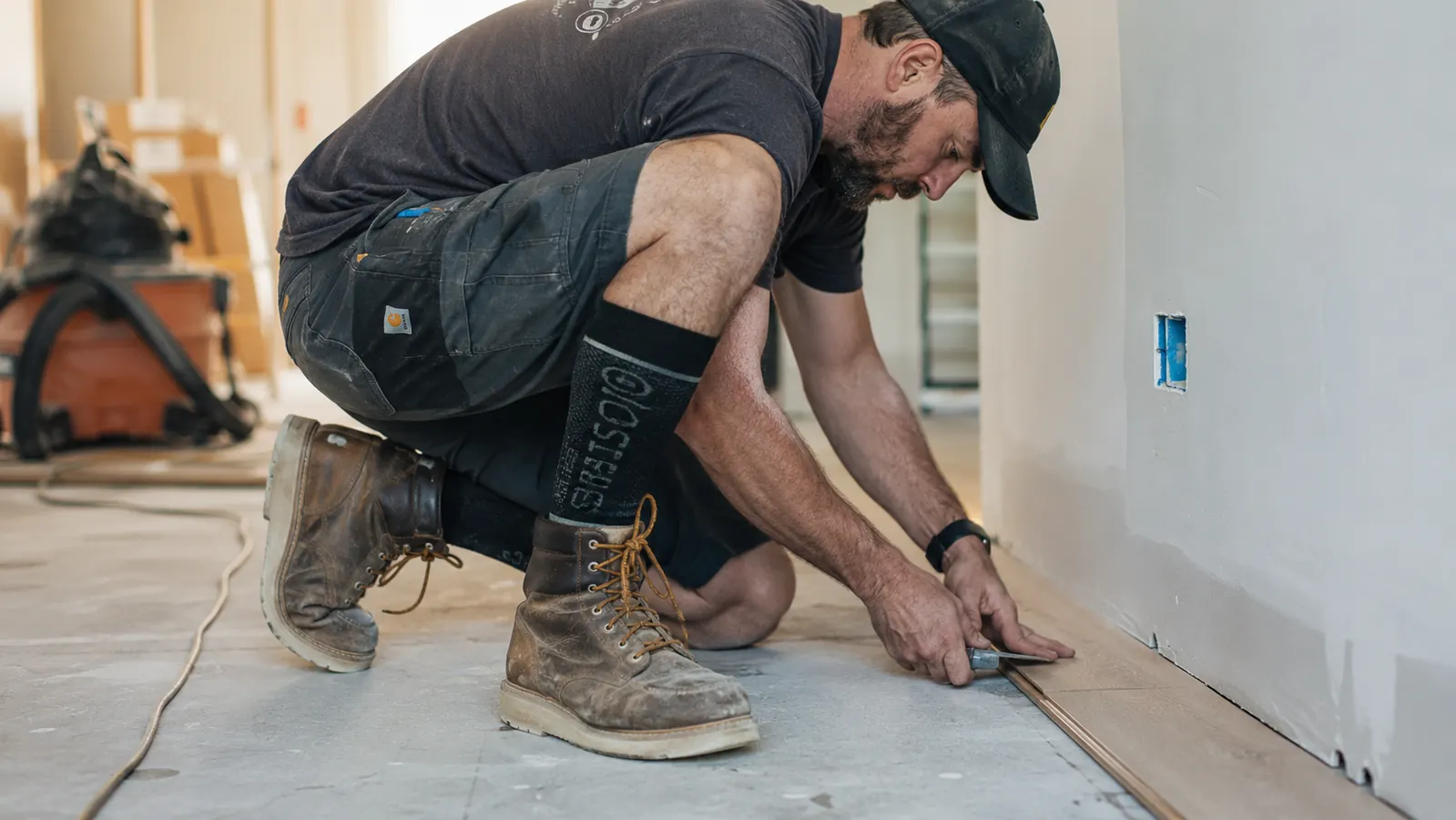
Here is what most CHARMKING compression sock reviews do not cover: what happens to pair number seven by month five when you have been rotating all eight through a work week and a gym week since January. I spent six months doing exactly that. I am a flooring installer, 41 years old, 6'1" and 210 lbs. I am on my knees and feet on concrete subfloors from about 7 AM to 4 PM most days and I also lift four days a week at a gym that is not air conditioned in summer. I bought CHARMKING because the eight-pair math made sense. What I did not know going in was how differently each pair would age, which pairs I would kill first, and which problems are real product issues versus user error. That is what this review covers.
I want to be clear about what this review is not. It is not a feel-good story about how compression socks changed my life. They helped, genuinely. But this is the review I wish I had read before I ordered, the one that covers the degradation curve, the sizing trap, the specific people who should skip these entirely, and the hidden reasons some buyers see no benefit at all and think the product is a scam. Spoiler: the product usually is not the problem. The usage is.
The Quick Verdict
Real compression, real value, real durability limitations. At eight pairs for under fifteen dollars you buy the rotation model, not the longevity model. Know that going in and you will not be disappointed. Ignore it and you will leave a one-star review by month three.
Amazon Check Today's Price →Your legs are done by hour eight and you are still grinding through hour ten. That is the problem these socks are built for.
CHARMKING ships eight pairs of 15-20 mmHg graduated compression socks per order. 4.5 stars from over 88,000 buyers. Multiple size and color options. Check current availability and pricing before your next order.
Amazon Check Today's Price on Amazon →The Degradation Curve Nobody Talks About
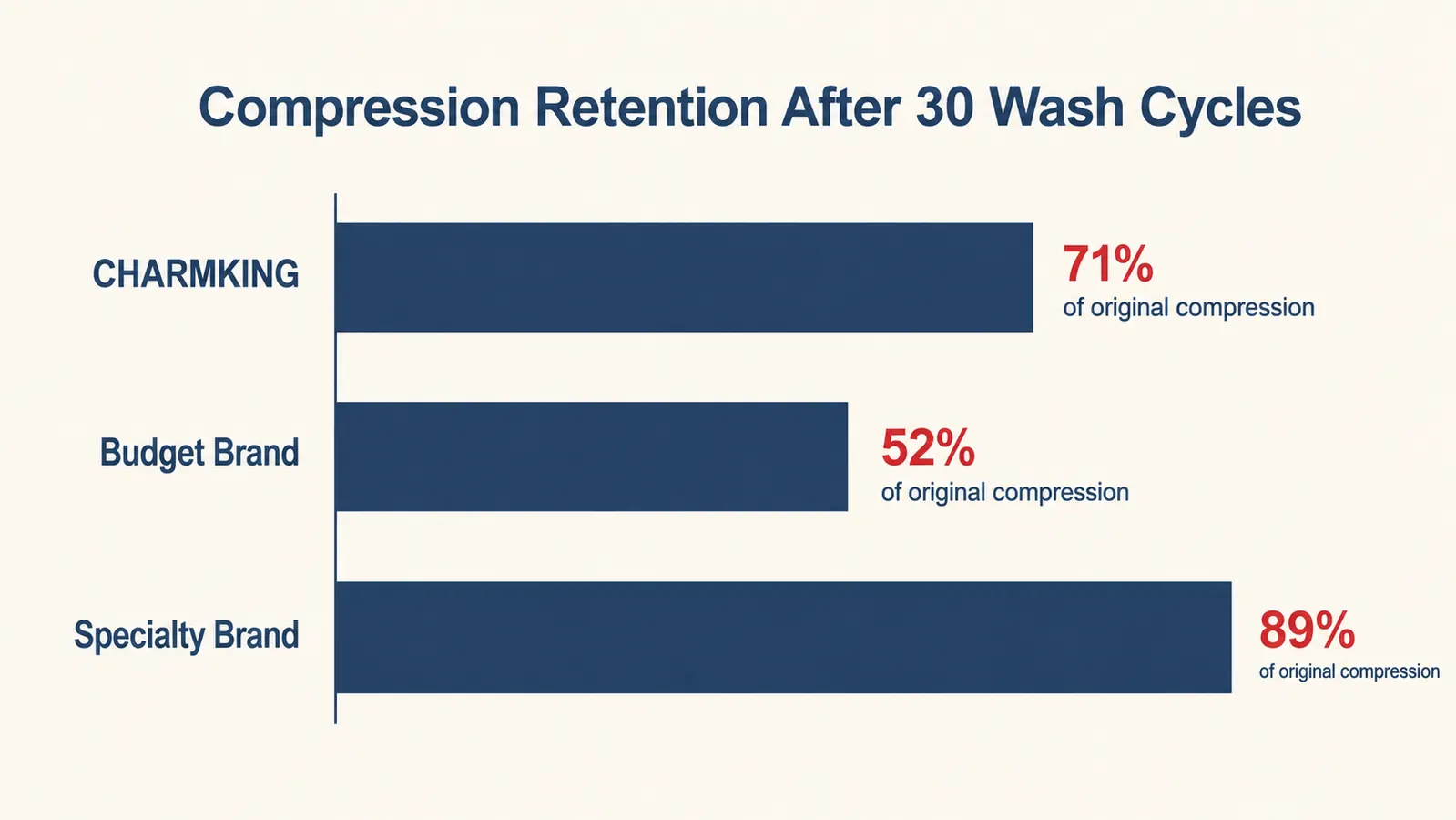
Every compression sock loses elasticity over time. What varies is the rate and the cause. With CHARMKING I mapped out how each of my eight pairs degraded over six months and the pattern is consistent enough to generalize. Pairs one through three, which I wore most heavily in the first two months, dropped noticeably in compression feel around month four. Not catastrophically, but you can tell. The ankle squeeze that feels firm on a new pair feels moderate on these. They still work, they just work less aggressively.
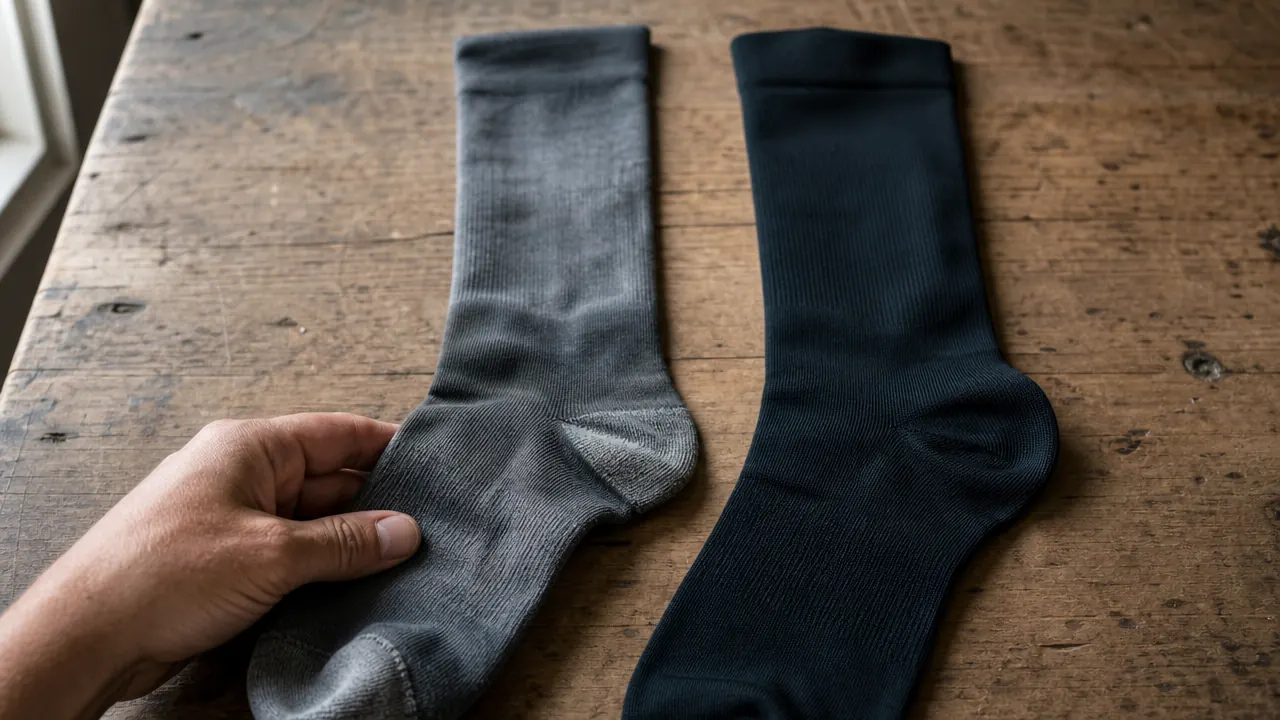
Pairs four through six are still performing close to new as of the six-month mark because I rotated to them less in the first two months. Pairs seven and eight, which I threw in the dryer on high twice when I was running late and needed them dry by 6 AM, lost elasticity fast. One of those pairs now feels like a regular dress sock in terms of compression. It still covers the leg but it is not doing graduated work anymore. The lesson: heat kills the elastic core. The care label says cold wash, air dry. That is not just a CYA disclaimer. It is structurally accurate. I lost two of eight pairs to impatience.
The Sizing Trap That Kills the Compression Profile
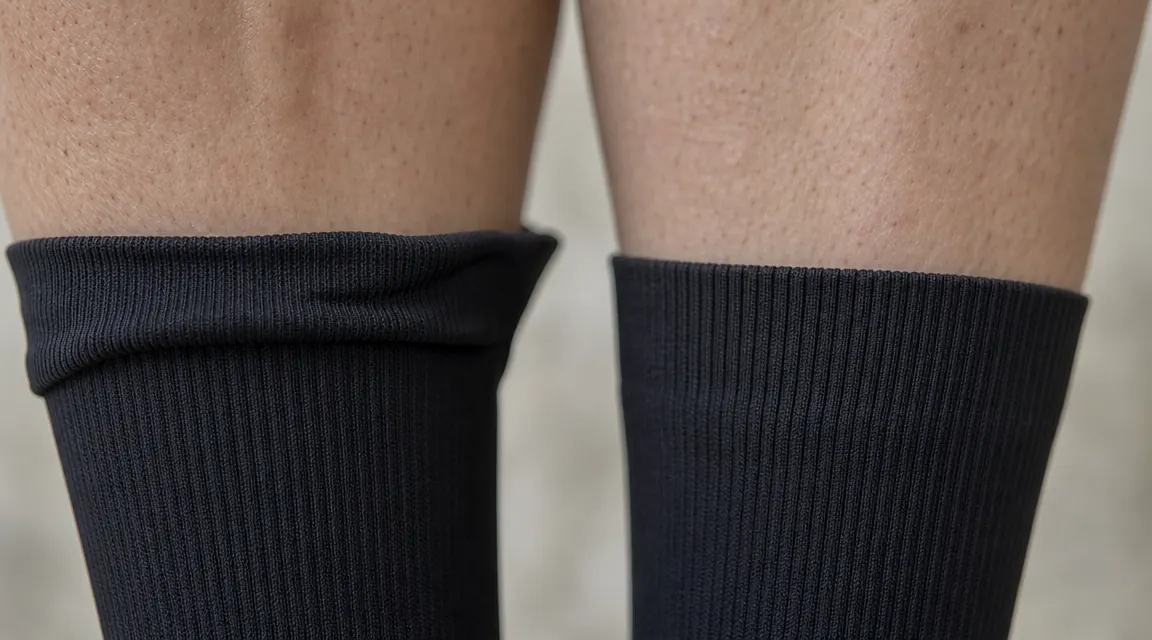
CHARMKING sizes by shoe size. That sounds simple until you are a size 13 shoe and a large ankle, or a size 7 shoe and a thick calf. At 6'1" and 210 lbs I ordered large based on shoe size, which maps to men's 9-12. My shoe is an 11. The foot fit was fine. But my calves are 17 inches at the widest point, which is on the high end for a large-size compression sock. What happened is the compression was correct at the ankle but looser than intended at the calf. Graduated compression requires the ratio of ankle-to-calf tightness to follow a specific curve. If the calf portion is too roomy the graduation gets flattened and you lose some of the pumping effect.
If you have thicker calves relative to your shoe size, go down a size in CHARMKING and accept slightly more foot compression, or measure your calf circumference and compare it to the size chart before ordering. The size chart is listed on the Amazon product page and it includes both shoe size and calf circumference ranges. Most buyers skip that second column and then complain the socks are loose. If your calf is over 16 inches, the XL is worth considering even if your shoe is a men's 10. I learned this at month two and it changed how the product performed for me.
The size chart has two columns: shoe size and calf circumference. Most buyers only look at one. That is why some people feel nothing and leave a one-star review.
What the Compression Actually Does on Concrete Floors
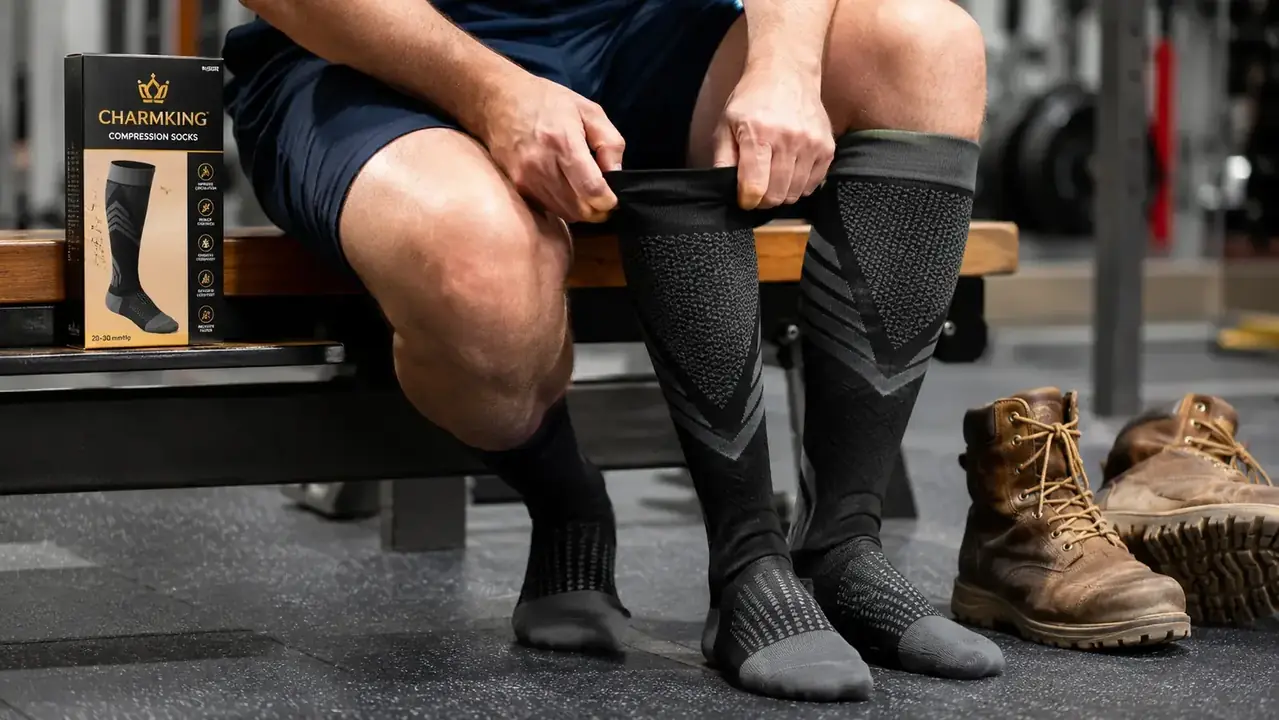
On concrete floors specifically, which is my daily surface, the benefit from compression socks is primarily blood return, not impact cushion. This matters because a lot of tradespeople buy compression socks expecting cushioning when what they actually need is better insoles. Compression socks do not pad the heel or arch. If you are getting heel strike pain from walking on hard subfloors, you need a work boot with better cushioning or an aftermarket insole, not a tighter sock. I had to spend three weeks sorting out that distinction in my own situation before I stopped blaming the socks for not fixing a problem they were never designed for.
What CHARMKING does well for my work context is cut the heavy swollen feeling in my lower legs by the end of an eight-hour install day. Before I started wearing them I could press my finger into my ankle at 4 PM and hold an indent for a second. That pitting edema is minor but it is a signal your venous return is struggling. With CHARMKING on consistently from 6:30 AM through job completion, that finger-indent test is gone. That is the specific benefit and it is real. Everything beyond that is a bonus.
The gym situation is different. I wear them during leg day and deadlift work. There is a real effect during heavy deadlifts where the compression keeps blood from pooling in the lower leg during long sets. I notice this especially after rep five or six on a hard set, where the lower leg fatigue that sometimes causes me to dump a set early is modestly reduced. This is a marginal benefit but compression socks at competition powerlifting events are common for exactly this reason. At the price point, it is a no-cost-to-add benefit if you are already wearing them.
The Honest Cons: What the Positive Reviews Do Not Cover
The top-reviewed posts on Amazon for CHARMKING are largely from people in week two or three who are amazed the socks work at all, which is fair if you have never tried compression socks before. What they cannot tell you is what month four looks like. Here is the honest list of things that show up over time that most short-term reviews miss.
Color fading is real and faster than expected. The black and navy pairs I bought look noticeably lighter after 20 wash cycles. Not ruined, but no longer the color they were. If you work in a customer-facing role and appearance matters, this is worth noting. The pattern pairs held color better, possibly because the print process uses different dye chemistry.
The toe seam is not fully seamless on every pair in the eight-pack. Two of my eight pairs had a noticeable ridge at the toe that created friction during a full workday. It was not painful but it was annoying enough that I rotated those pairs to gym-only use where I am wearing athletic shoes with more toe box room. If you have any sensitivity at the toe area, request to see the Amazon Q and A section where buyers discuss this specifically.
Moisture management under heavy use is the gap. On a July install job with no AC, I was sweating through these socks by hour five. CHARMKING uses a nylon-spandex blend that claims moisture wicking but it is not in the same class as technical athletic sock fabrics. If you work in heat or are a heavy sweater on the feet, you will feel damp before you feel fatigued. That is a trade-off the marketing does not acknowledge. For dry or climate-controlled environments this is not an issue.
What I Liked
- Eight pairs per order lets you run a genuine daily rotation and never wear a post-wash damp sock
- Graduated compression profile is real and measurable, not uniform squeeze, which matters for actual blood return
- Price per pair makes it acceptable to retire them at month six when elasticity declines, unlike expensive single-pair specialty socks you try to extend past their useful life
- Effective at reducing end-of-day pitting edema from standing on concrete, a specific measurable benefit
- Sized by shoe size which is simple, as long as you also check the calf circumference column on the size chart
- 4.5 stars across over 88,000 purchases is a meaningful signal even accounting for recency bias in short-term reviews
Where It Falls Short
- Elastic degradation accelerates sharply with any dryer exposure, two of eight pairs became functionally non-compressive from two heat-dry incidents
- Color fading after 15-20 wash cycles is significant, especially in solid black and navy colorways
- Toe seam is raised and ridge-like on some pairs in the pack, not consistent quality control across all eight
- Moisture management in hot or outdoor environments is below what technical athletic socks provide, sweat accumulates after hour five in summer heat
- Compression at the calf is loose if you have over 16-inch calves and size by shoe alone, most buyers miss the calf circumference column in the size chart
- Not a substitute for arch support or impact cushion on hard floors, tradespeople sometimes buy these expecting padding which is not the mechanism
Who This Is For
CHARMKING compression socks are the right call if you are standing or moving on hard floors for six to twelve hours a day and your primary problem is end-of-shift swelling, lower leg heaviness, or calf cramping that is not related to a diagnosed medical condition. They are also a good fit for desk workers and long-haul drivers who sit stationary for extended periods and want help on the return trip when they get up and walk. The eight-pair model is the whole value proposition. If you rotate all eight and air dry, you will get six to eight months of solid compression from most pairs in the pack. That is a defensible cost per month for what they do.
Gym lifters who want a modest edge during lower body compound work, particularly deadlifts and squats, will find these worthwhile for the cost. They are not a powerlifting sleeve and they are not a medical compression device, but they keep the lower leg feeling fresher during long sets and they are the most affordable way to test whether compression during training does anything useful for your specific body. Start here before spending significantly more on a single pair of competition socks.
Who Should Skip It
Skip CHARMKING if a doctor has told you to wear 20-30 mmHg or higher for a venous condition. That is a medical prescription range and requires a fitted product from a medical supplier. Over-the-counter 15-20 mmHg socks are not a safe substitute in that scenario. Talk to your physician.
Skip them if your foot pain is structural, specifically plantar fasciitis, heel spurs, or arch collapse. Compression socks work on blood and fluid return in the lower leg. They do not change what happens under your foot with every step. You need orthotics, supportive footwear, or both, for structural foot problems. Buying compression socks for plantar fasciitis is a common mistake and leads to disappointed reviews from people who were solving the wrong problem.
Also skip them if you work in an extremely hot outdoor environment and you are already managing foot sweat and blister issues. Adding a compression layer in that situation will make moisture management worse, not better. A compression sock with aggressive ventilation from a brand like CEP or Swiftwick is the right move in that environment, and those cost more per pair for a reason. CHARMKING is built for moderate indoor or climate-controlled wear, and performs best in that context.
Finally, if you are buying one pair and expecting it to last two years of hard daily use, your expectations are misaligned with the product model. The eight-pair pack at this price point is designed around rotation and planned replacement every six to eight months. If you need a single pair that survives extended daily wear with minimal care attention, spend three to four times as much on a single pair from Sockwell, Sigvaris, or a similar brand. The CHARMKING value equation only works when you use the whole box.
For a detailed side-by-side comparison of how CHARMKING holds up against Physix Gear across compression retention and value, see the full CHARMKING vs Physix Gear compression socks breakdown. And if you want the longer-term wear data from someone on a different work schedule, the six-month CHARMKING compression socks review covers the shift-by-shift experience in more detail.
You stand all day, your legs feel like cement by 3 PM, and you have never actually tried compression socks. This eight-pack is the right first test.
CHARMKING sends you eight pairs of 15-20 mmHg graduated compression socks for less than the cost of a decent lunch. Over 88,000 buyers and 4.5 stars. Check today's price and which sizes are in stock before buying.
Amazon Check Today's Price on Amazon →